
The Leather Pride Flag was designed by Tony DeBlase and first presented in 1989. It quickly became an important symbol for leather communities, especially in spaces where identity, visibility and shared values mattered deeply.
The design emerged during a time when leather communities were continuing to shape their own visual language and public presence. Like many cultural symbols, the flag became meaningful not only because of its design, but because of the people who embraced it and gave it life.
Over the years, the Leather Pride Flag has become closely associated with leather events, pride spaces, social communities and broader LGBTQ+ cultural history.
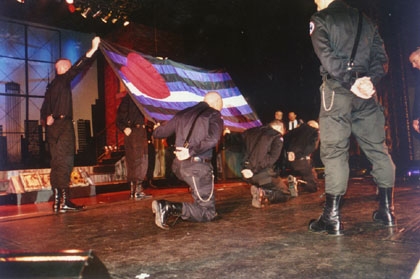
Historical appearances, including displays during events such as IML 1999, helped strengthen the Leather Pride Flag as a visible symbol within leather culture.
What Does the Leather Pride Flag Look Like?
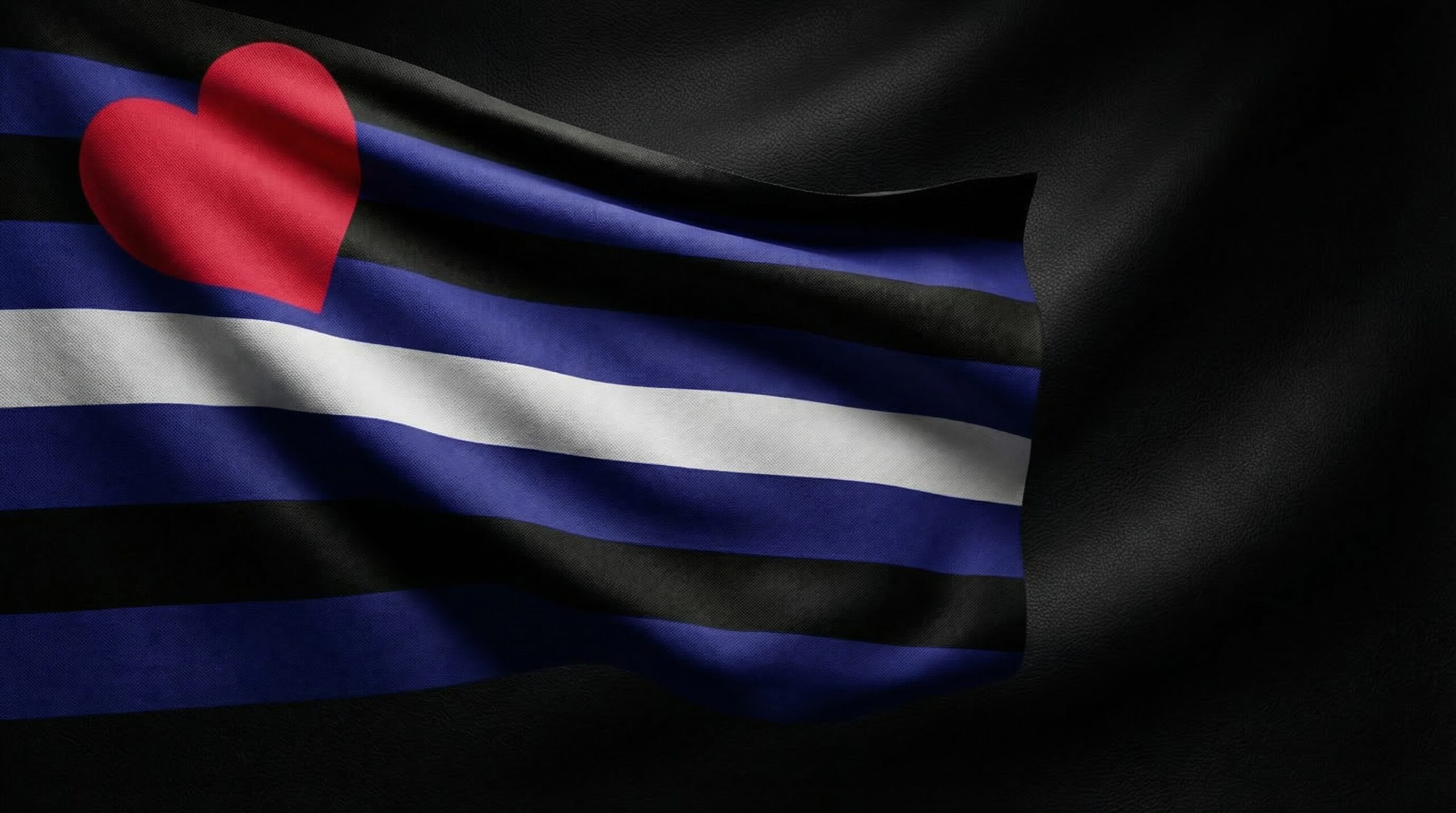
The Leather Pride Flag is traditionally made up of horizontal stripes in black, blue and white, with a red heart placed in the upper left area.
Its bold and minimal design is one of the reasons it became so memorable. The flag is visually strong, immediately recognizable and rich in atmosphere. It reflects a world of symbolism, style, masculinity, intimacy, connection and cultural identity.
Even for people who are new to leather culture, the flag often stands out as a powerful visual marker.
The Meaning of the Colors and Symbols
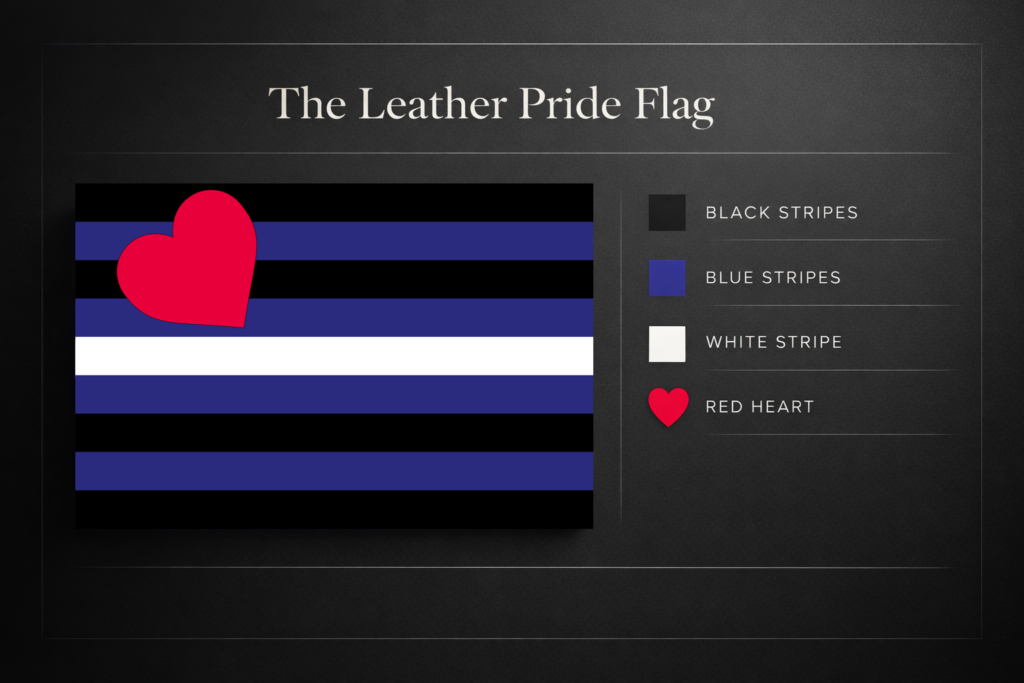
One of the most discussed aspects of the Leather Pride Flag is the meaning of its colors and symbols.
Black
Black is often associated with strength, elegance, mystery, formality and power. In leather culture, black also connects naturally with leather fashion, visual codes and a strong sense of presence.
Blue
Blue can suggest depth, loyalty, confidence and stability. Within the flag, it adds contrast and creates a sense of balance between intensity and calm.
White
White is often interpreted as openness, clarity and space. In the context of the flag, it creates visual rhythm and highlights the surrounding colors.
The Red Heart
The red heart is one of the most memorable elements of the Leather Pride Flag. It introduces warmth, human feeling and emotional presence into an otherwise bold and structured design. For many, it symbolizes love, connection, loyalty, passion and community.
Is There One Official Meaning?
The Leather Pride Flag is widely recognized, but not every detail of its design has a single fixed interpretation accepted by all. This is part of what makes the flag culturally interesting.
Many people connect with the flag through personal experience, community tradition, emotional symbolism or visual identity. In that sense, the Leather Pride Flag works both as a shared cultural symbol and as something people interpret through their own relationship with leather culture.
Its power comes not only from design, but from lived meaning.
Why the Leather Pride Flag Matters
The Leather Pride Flag matters because symbols help communities define themselves, recognize one another and preserve cultural memory.
In leather culture, the flag can represent:
- visibility
- shared identity
- cultural continuity
- pride
- belonging
- visual language
- respect for community history
For some, it is a symbol seen at events and gatherings. For others, it carries a more personal significance tied to self-expression, identity or connection with a wider cultural world.
The flag helps make leather culture visible in a way that is both aesthetic and meaningful.
The Leather Pride Flag in Contemporary Culture
Today, the Leather Pride Flag continues to appear in many contexts: fashion, public events, community spaces, digital platforms and cultural conversations.
Its ongoing presence shows that leather culture is not frozen in the past. It continues to evolve, reinterpret itself and remain visible across generations. The flag works as both heritage and living symbol.
This is one reason it makes such a strong starting point for anyone exploring leather culture for the first time.
Leather Pride Flag and Cultural Identity
To understand the Leather Pride Flag only as decoration would be to miss its deeper significance. The flag is part of a broader cultural language that includes style, codes, ritual, aesthetics, community and history.
It signals that leather culture has its own symbols, memory and visual identity. That matters, especially in a world where subcultures are often misunderstood, simplified or reduced to surface impressions.
The Leather Pride Flag reminds people that leather culture is layered, historical and deeply human.